
GEO – 02
Entity & Brand Strategy.
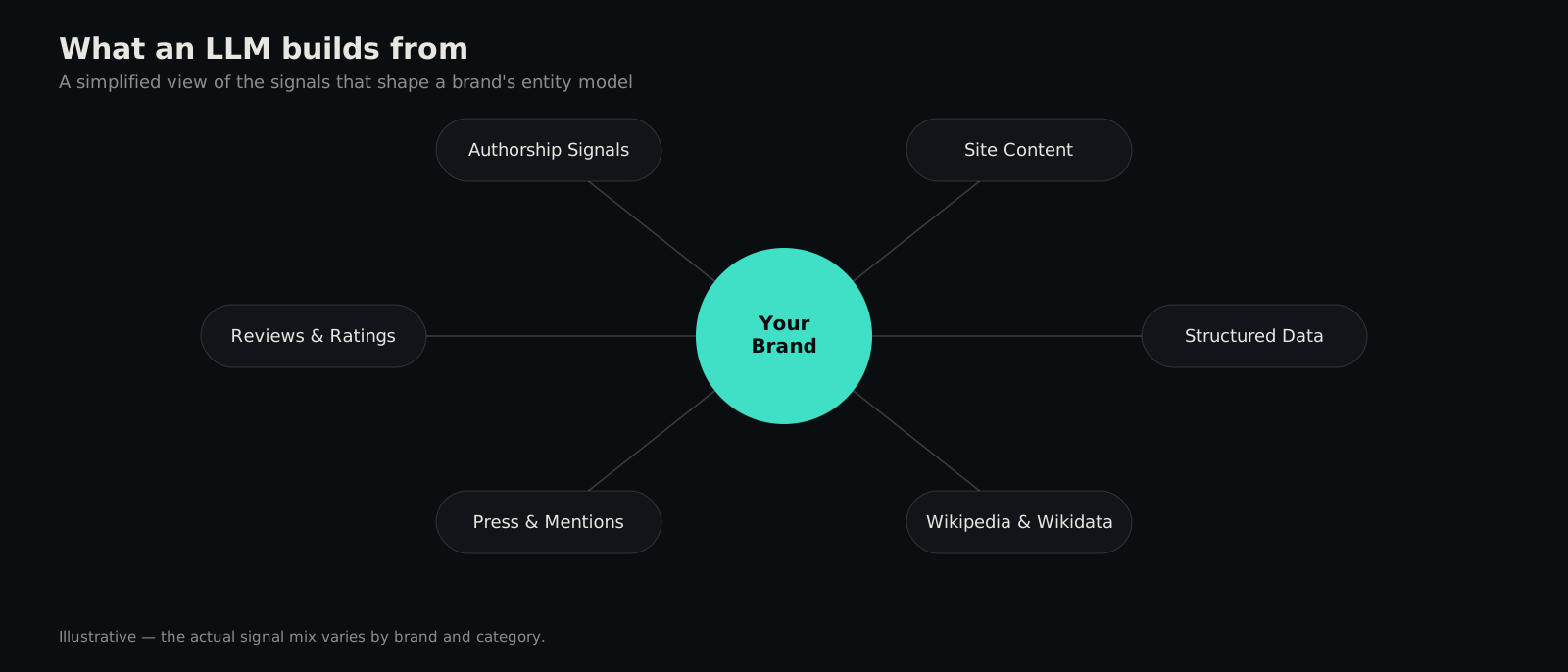
Large language models don't just index your content. They build a picture of what your brand is, what it stands for and what it is credible on – assembled from your website, your mentions across the web, your structured data and your authorship signals.
Entity and brand strategy is the work of shaping that picture deliberately, so that when a model is asked about your category your brand comes up for the right reasons. The alternative isn't neutrality; it's a picture assembled by accident out of whatever happened to be lying around.
What this covers
- Entity Definition Clarifying and consistently communicating what your brand is, its category, its differentiators, its key associations, across every surface an LLM might use as a training or retrieval source.
- Structured Data Strategy Schema.org implementation that describes your brand, its people, its products and its relationships in a machine-readable format that both search engines and LLMs can use directly.
- Knowledge Panel Optimisation Managing the signals that feed Google's Knowledge Graph, the entity data sitting directly behind AI Overviews and other generative surfaces. I think of it as a sort of knowledge tree: what hangs off your brand, and how firmly it is attached.
- Brand Signal Audit Mapping the existing web footprint that LLMs are likely to have trained on – Wikipedia, Wikidata, press coverage, reviews, directory listings – and identifying gaps or inaccuracies.
- Content Strategy for Entity Authority Building the on-site and off-site content assets that establish topical authority – the kind of depth and consistency that makes LLMs treat your brand as a credible source to cite.
- AI Intent Mapping A working framework for mapping the questions your audience puts to AI systems against the intents those systems are trying to satisfy – which is how you find the places your brand can credibly and usefully appear, rather than the places you'd simply like to.