
Won or lost by who shows up nearby.
Plumbers, electricians, builders, dentists, locksmiths. Any business where somebody nearby needs help today works to a completely different playbook than national ecommerce or SaaS. Local search is won or lost on proximity, trust signals, and how consistently you show up across the places people actually look.
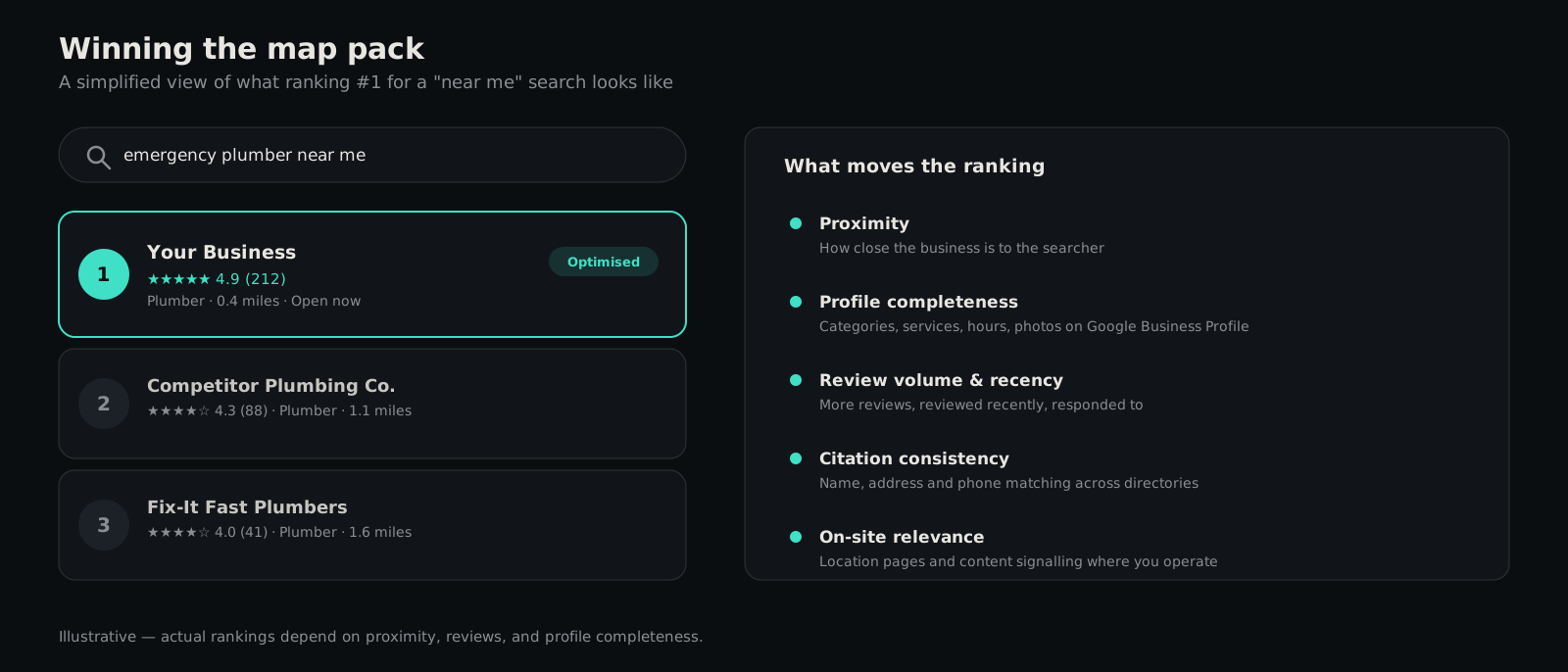
I work with local and multi-location businesses on the fundamentals that move the map pack – the three listings that sit above the ordinary results – and local organic rankings alongside it: Google Business Profile optimisation, citation consistency, review strategy, and the on-site signals that tell Google exactly where you operate and who you serve.
Most of this work is unglamorous and quicker to put right than people expect. A great many local businesses are losing the map pack to a competitor whose only real advantage is a properly completed profile.
And yes, that includes the more unusual service-area businesses. If your customers search for you by location, the same principles apply whether you fix boilers or (eventually) rent out humanoid technicians to fix real-life things.
What this covers
- Google Business Profile Optimisation Claiming, verifying and properly completing the profile: categories, services, hours, photos and the review flow. It's the highest-leverage thing most local businesses have left undone, and it costs nothing but attention.
- Local Citations & NAP Consistency Making sure your name, address and phone number match everywhere search engines look. Two slightly different versions of your own address across a handful of directories is enough to make Google hedge on where you actually are.
- Multi-Location Strategy Location page architecture and structured data for businesses running several branches, franchises or service areas – built so those pages support each other rather than quietly compete for the same searches.
- Review Strategy A sustainable process for asking for reviews and for responding to them. Volume matters, but so does recency: forty reviews from three years ago count for less than you'd hope.
- Local Content & Schema LocalBusiness markup and genuinely location-specific content that backs up your relevance for "near me" and location-qualified searches – rather than the same page forty times with the town name swapped out.
Common questions
- Do I need a physical shopfront to rank locally? No. Service-area businesses can hide the address entirely and set a service radius instead, which is the right setup if you work out of a van or from home. Plenty of trades get this wrong and either publish a home address they didn't want public, or leave the area blank and lose the local relevance altogether.
- How many reviews do I actually need? It's relative rather than absolute. What matters is how you compare with whoever is currently ranking above you, and how recent yours are. A steady trickle beats thirty in one week, which tends to look to Google exactly like what it is.
- I cover a wide area. Can I rank across all of it? Not evenly, no. Proximity is a strong signal, so you'll always do better nearer your registered location. The realistic approach is to dominate close in and build genuine location pages for the areas actually worth the effort, rather than forty thin ones with the town name swapped out.