
The four pillars of organic search.
SEO isn't one thing. Ask ten people outside of marketing what it is and you'll get ten vague answers, most of them about keywords.
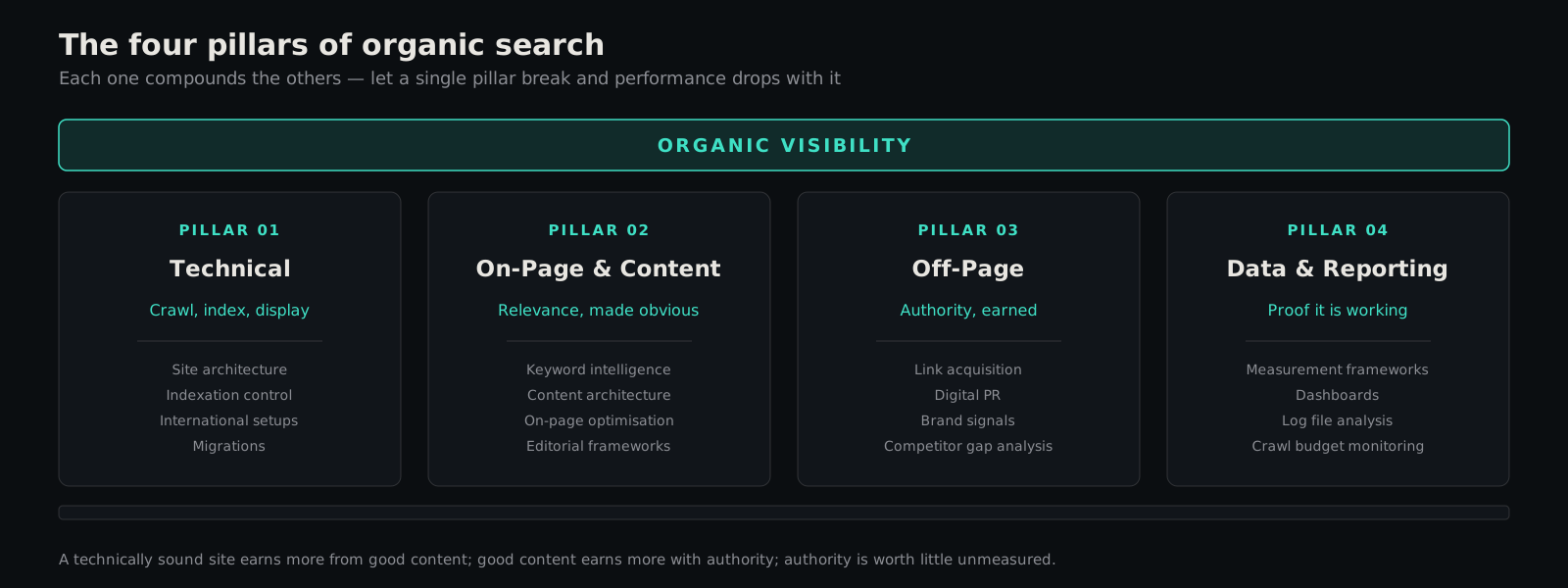
For me it's four disciplines that compound one another: technical, content, off-page and measurement. Working together, each one makes the other three worth more. Let one of them break and performance almost always drops with it – which is why the industry settled on calling them pillars, and why I do too.
A technically sound site earns more from good content. Good content earns more when it has authority. And authority is worth very little if you can't measure what it's actually doing.
I work across all four, independently or together. Even when I'm only engaged on one, I'll want to understand the other three first – much like the discovery phase in a legal case, where you can't argue anything properly until you know what's in the file. Expect a lot of questions early on, including about parts of the site I'm not being asked to touch.
Technical SEO
Crawl, index, display. If search engines can't do all three cleanly, nothing else on this page matters. Architecture, indexation, international setups and large-scale migrations – including a 23-domain one.
Learn more → Pillar 02On-Page & Content
Keyword research that finds genuine opportunity, content structured so its relevance is obvious, and editorial frameworks your writers can follow without having to become SEO specialists.
Learn more → Pillar 03Off-Page & Backlinks
Links, mentions and brand signals are how search engines decide whether to take you seriously. This is about building them sustainably, including in verticals where the risk tolerance is very different.
Learn more → Pillar 04Data & Reporting
Dashboards, log files and crawl monitoring. The pillar that tells you whether the other three are working, and lets you defend the budget when someone senior asks what they're paying for.
Learn more →How an engagement usually starts
- Audit first Whichever pillar you're hiring for, the work starts by establishing where you actually are. There's no point building a plan on assumptions, and I'd rather find the awkward things myself than have them surface in month four.
- A roadmap you can argue with Prioritised by likely impact and by what your team can realistically ship, not a 200-point list of everything a crawler flagged. If you disagree with the order, that's a useful conversation rather than a problem.
- Execution or advisory Some clients want the work done. Others have capable teams and want someone who has seen it before to check the thinking before they commit a quarter to it. Both are fine, and plenty of engagements move between the two.
Where SEO meets GEO
These four pillars are also most of the groundwork for GEO. Structured data, a clear entity definition, content that answers a question rather than circling it – large language models and search engines are reading much the same signals, for now. The overlap is bigger than most teams expect, and where it diverges is where the interesting work is.
And if you're a local or multi-location business – a trade, a clinic, a handful of branches – the priorities shift considerably. Proximity and trust signals do work that a national ecommerce site never has to think about.
Common questions
- How long before SEO shows results? It depends almost entirely on where you're starting. Technical fixes on a site with a genuine indexation problem can move things in weeks. Building authority in a competitive vertical is a six to twelve month conversation, and anyone promising otherwise is guessing. What I will commit to is telling you early whether it's working – which is exactly what the fourth pillar is for.
- Do I need all four pillars? Not all at once. Most engagements start with one or two, usually whichever is most obviously broken. But I'll still want to look at all four, because the reason a content programme is underperforming is quite often technical, and the other way round just as often.
- Do you work with in-house teams or replace them? Mostly alongside them. A lot of the work is advisory: your team knows the business and can ship, and what they want is someone who has seen this particular problem before. I'll also do the hands-on work where there isn't a team to do it.